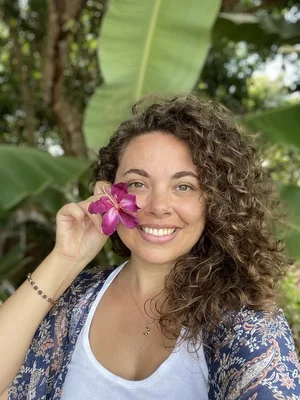
Joy Fisher
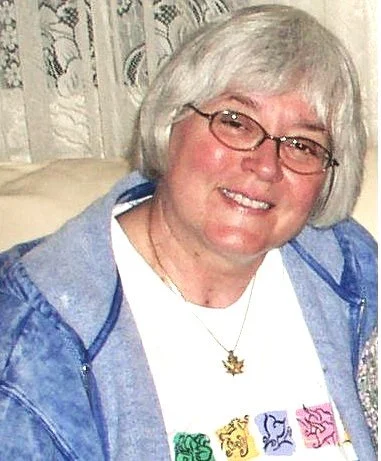
In her 20s, Joy lucked into a job with the Las Vegas SUN newspaper and, over time, rose through the ranks from “copy girl” to editor of the SUNday Scene weekend magazine. She loved journalism. But the Second Wave of the women’s movement swept her away on a tidal wave of idealism, and she became a lawyer so she could change the world for women. (She tried.) Although she continued to practice law, the itch to write never left, and she scratched it wherever she could: writing poetry at the Women’s Writer’s Center in Cazenovia, New York for a year; in a writing group she started in Salzburg, Austria, as she struggled to learn the art of playwriting on her own; and at the University of Victoria in British Columbia where she eventually got a BFA in Creative Writing. When she returned to the United States in 2016, she discovered the Hawaii Writers Guild and finally felt like she’d found her writing home.
Joy’s Published Book
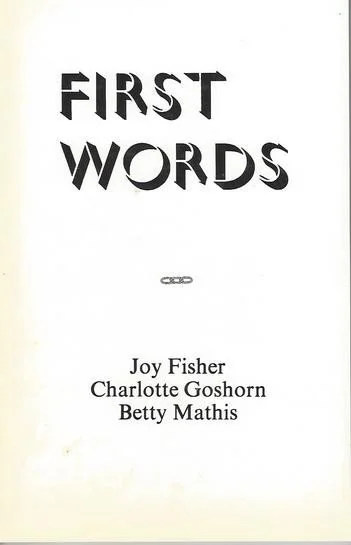
First Words
When I returned from the Women's Writers' Center in New York, I met Charlotte Goshorn and Betty Mathis at a writing workshop at the Women's Building in Los Angeles. We formed our own little group after the workshop was over, determined to publish our poetry together. We did that in 1979, calling our book First Words. We gave readings at all the women's bookstores in Los Angeles.
Even then, language itself preoccupied me as a theme. In those days, I was becoming aware of the patriarchal influences on language that distorted women's "herstory."
An excerpt from the book First Words
THE POET FIGHTING A LOSING BATTLE
IN A FOREIGN LANGUAGE
I
A Russian bureaucrat
said to an American feminist:
My wife produces only damaged goods;
We have three daughters.
In the audience, I gasp audibly
as if struck in the face
and then
apologize
for making such a loud noise.
Damaged goods?
Oh, yes, I’ve been damaged.
Words can mutilate.
How they injure us
flay us, lay us open
raw and bleeding
beneath their insults!
Each time I see the generic “he”
Another line is added to this
network of scars
deforming me.
The Amazons, I’ve heard, learned Scythian
but refused to teach their language to the Scythians.
Wise decision.
Bad enough to be insulted in a foreign idiom.
I walk among words
soldier in an arsenal
learning the handling characteristics of each;
when it’s best used
how deeply it will wound
how to wield it like a labyris
so both edges strike home with a single sweep.
This is a war.
Words are my weapons.
II
Two years ago, I began to
forget
occasional words, the names of simple things.
Mid-sentence I would
falter
mind suddenly blank, conversation
halted.
I think
even then I began to see
though certainly not consciously, that
this is not my language;
this is their language.
What name should I call you, my love?
Must I call you “woman”?
woman: out of man.
How they twist the truth of life!
What is our name, my love?
How are we truly called?
Must I always call to you in their language?
Galloping down the Sarmatian plain
muscled calves tight against mare flank
hair streaming in wind off the Caucuses
how did the Amazons call to each other?
What was our name then?
I don’t know
how long I can
continue
scanning centuries of silence for
echoes of those cadences
straining our
“history”
through their words.
How their words wound me as I speak:
grenades exploding in my mouth!
Oh, my love
we are in a war
and these words are their weapons!
More and more I fever
after the sanctuary of our lost, our mother tongue.
more and more
the oppressor’s tongue
sticks
in my throat.